
In our ever-evolving world, AI has reached every realm of life, including the beauty industry. While AI can’t perform your haircutting service, it can be a great tool when used correctly. There has been an increase in the popularity of using AI to explore trends, colors, and cuts that you may be too nervous to actually get done. Between virtual try-ons and AI image generators, there are endless possibilities. As AI is still and will always be a work in progress, sometimes the excitement masks the reality of the beauty industry.
AI Can Be Our Best Friend
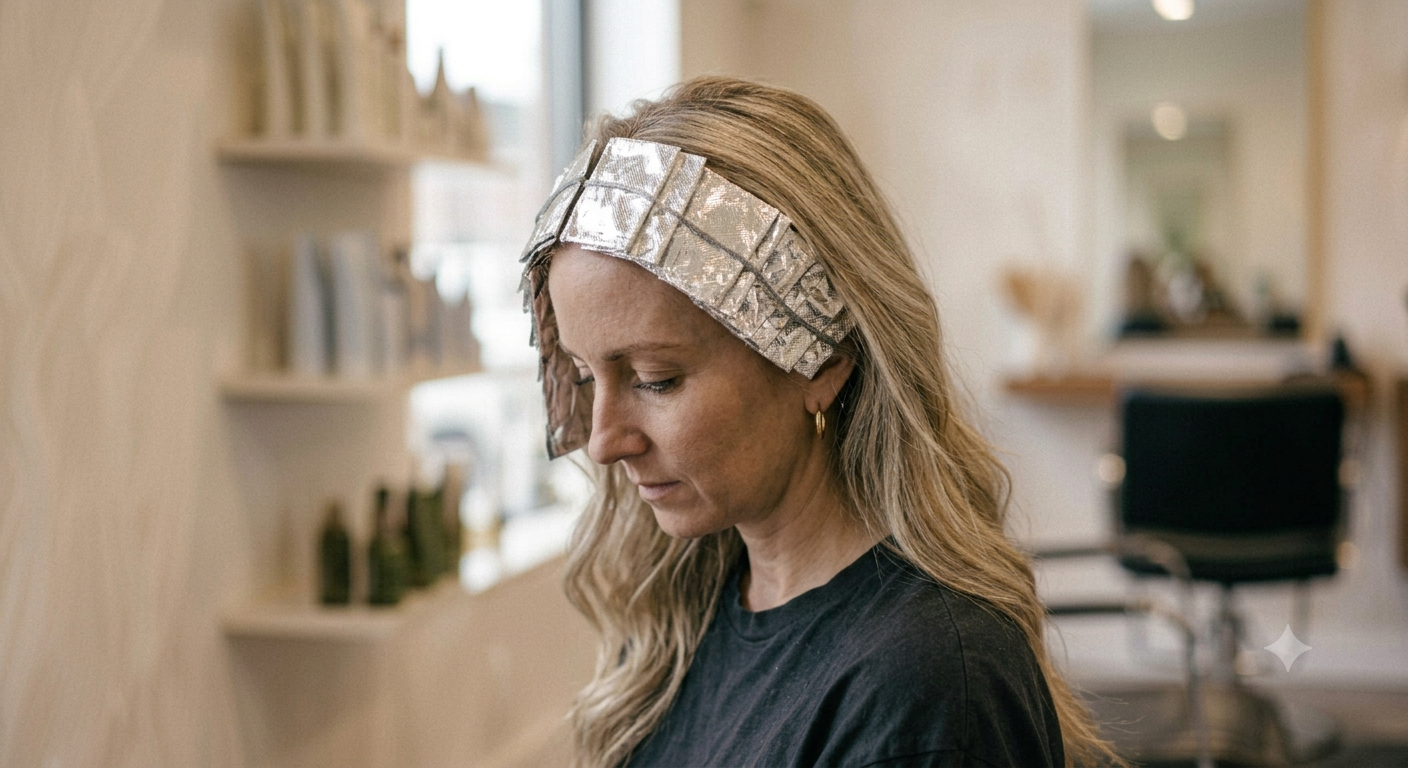
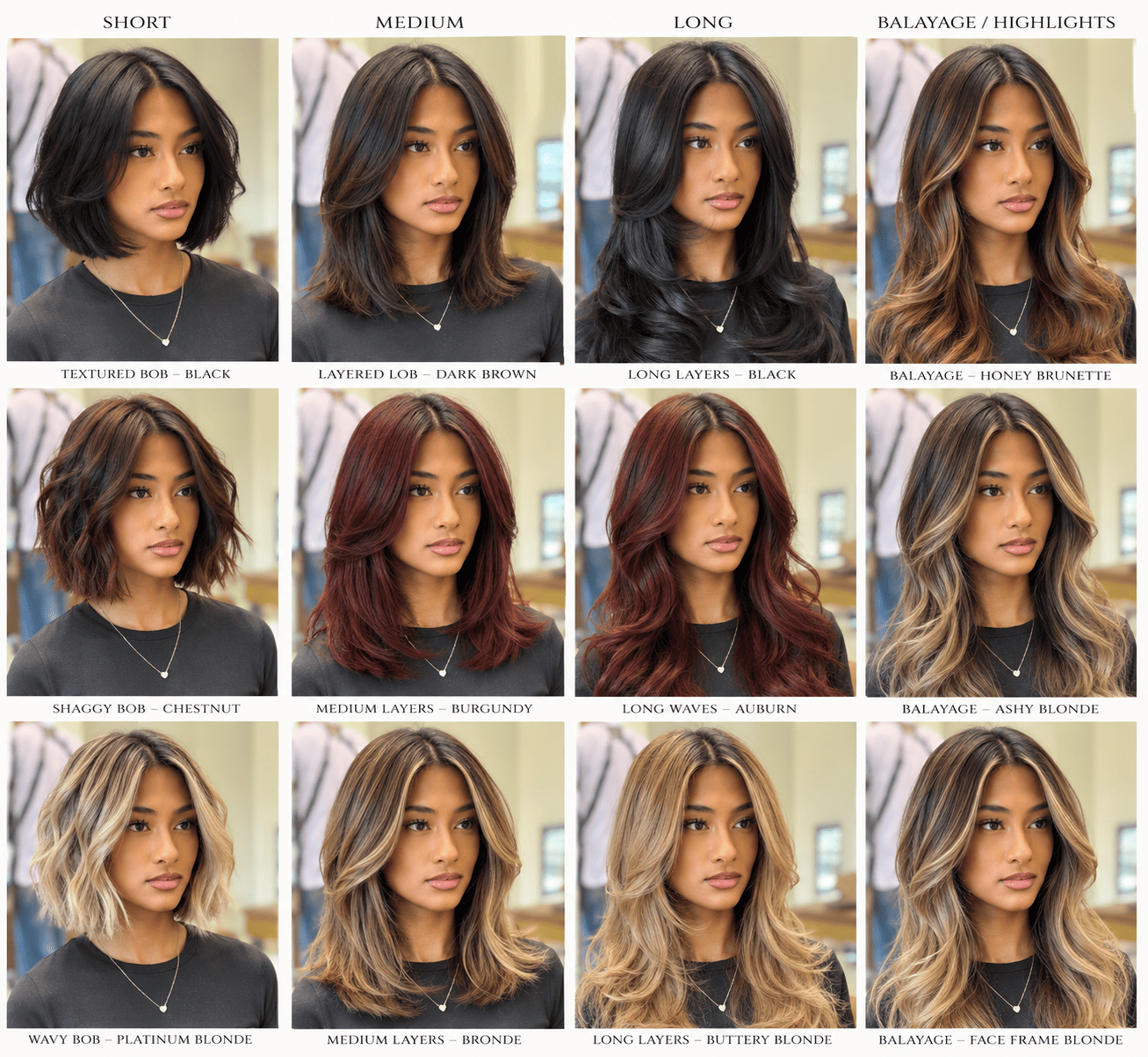
One of the newest trends is to use an AI image generator to visualize yourself in new, unimaginable ways. Want to try the new Cowboy Copper, or ever wonder what you would look like as a platinum blonde? AI has made it possible for you to take your most recent selfie and see what you could look like. Not only can AI make your hair a completely different color, but it can also create a variety of different haircut styles for you too. From bobs to long layers to even mullets, you could see endless possibilities for hairstyles.
This tool can be great for appointment time prep. For those who feel indecisive about needing a change but not knowing what exact change they need, it can help. They can start to get a feel for what they’re leaning towards and, even more importantly, what they definitely want to avoid. It is important to remember that these AI inspirations are truly just that: inspiration. This tool can help clients gain the confidence they need to try something new and begin this journey alongside their stylist.
This tool can be great for appointment time prep. For those who feel indecisive about needing a change but not knowing what exact change they need, it can help. They can start to get a feel for what they’re leaning towards and, even more importantly, what they definitely want to avoid. It is important to remember that these AI inspirations are truly just that: inspiration. This tool can help clients gain the confidence they need to try something new and begin this journey alongside their stylist.
Where AI for Hair Falls Short
With any AI help, there should always be some caution. While AI may claim to find hair colors and cuts that are perfectly suited for your face shape or skin tone, it truly doesn’t see your hair for everything it is. AI can’t account for your actual skin tone because your selfie may look different in direct sunlight, warm indoor lighting, or studio lighting. If your selfie has a filter or any alterations as well, this can throw off the AI’s ability to accurately make a recommendation.
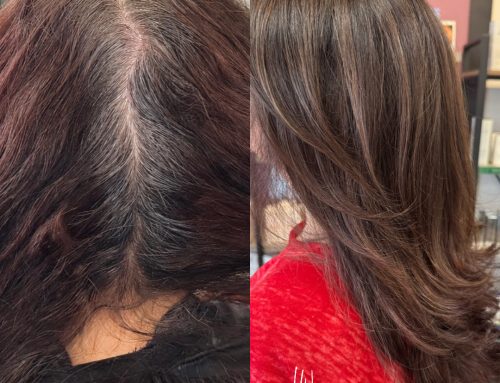
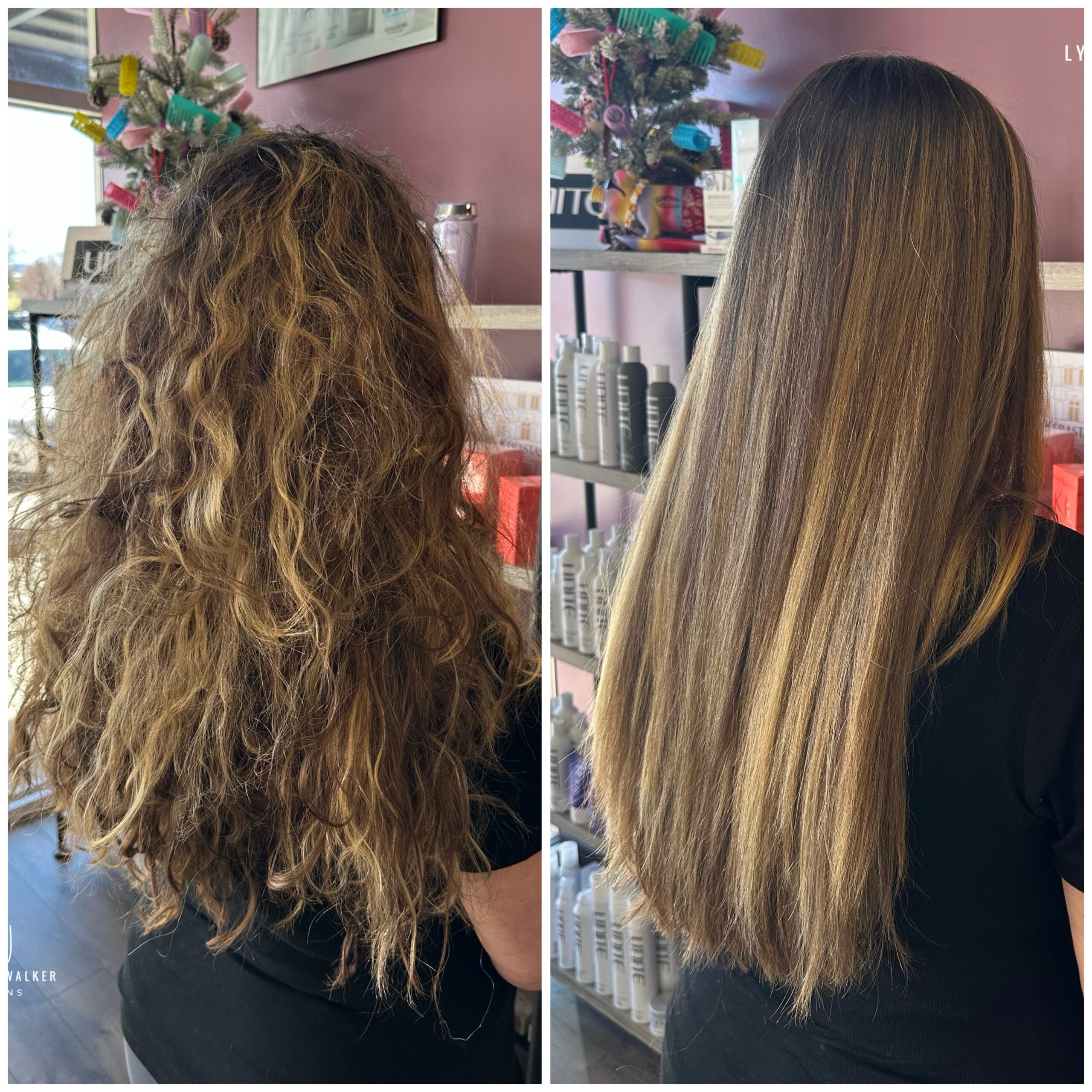
Not only that, but AI can’t decipher your hair’s unique texture, density, or growth pattern, all of which affect your haircut and color. Without knowing your hair’s color history (previous color products, damage, or the porosity of your hair), an AI generator is essentially guessing. It doesn’t know that your hair has been lightened twice before, or that it’s prone to breakage, or that your natural texture won’t hold a style the same way a smooth, computer-rendered version does.
Lighting and filters can also make colors look more vibrant or seamless than what’s physically achievable in a salon chair. A rich, dimensional copper that glows on your screen might involve a level of lift or toning that your hair simply can’t handle in one visit, or at all, depending on its condition. AI doesn’t know what’s realistic in a single sitting. Going from dark brown to platinum, for example, is rarely a one-appointment transformation, but an AI image will show it to you instantly and flawlessly, with none of the multi-step process required to get there safely.
Bone structure, face shape, and how hair actually falls aren’t always rendered accurately either. A cut that looks effortless and face-framing in a generated image may not account for how your hair naturally parts, how much movement it has, or how it will sit once it’s dry versus freshly styled. And beyond the hair itself, generated images can subtly smooth, slim, or idealize your features, which means you may be comparing yourself not just to a new hairstyle, but to a quietly enhanced version of your own face.
Not only that, but AI can’t decipher your hair’s unique texture, density, or growth pattern, all of which affect your haircut and color. Without knowing your hair’s color history (previous color products, damage, or the porosity of your hair), an AI generator is essentially guessing. It doesn’t know that your hair has been lightened twice before, or that it’s prone to breakage, or that your natural texture won’t hold a style the same way a smooth, computer-rendered version does.
Lighting and filters can also make colors look more vibrant or seamless than what’s physically achievable in a salon chair. A rich, dimensional copper that glows on your screen might involve a level of lift or toning that your hair simply can’t handle in one visit, or at all, depending on its condition. AI doesn’t know what’s realistic in a single sitting. Going from dark brown to platinum, for example, is rarely a one-appointment transformation, but an AI image will show it to you instantly and flawlessly, with none of the multi-step process required to get there safely.
Bone structure, face shape, and how hair actually falls aren’t always rendered accurately either. A cut that looks effortless and face-framing in a generated image may not account for how your hair naturally parts, how much movement it has, or how it will sit once it’s dry versus freshly styled. And beyond the hair itself, generated images can subtly smooth, slim, or idealize your features, which means you may be comparing yourself not just to a new hairstyle, but to a quietly enhanced version of your own face.
The Client Frustration
This is where the real tension can start. The gap between an AI-generated image and the actual salon result can lead to genuine disappointment, even when the stylist’s work is excellent. A client might walk in with a photo that looks perfect and walk out feeling like something is “off,” simply because no human head of hair could have matched that image exactly in the first place.
This is why trust and communication with your stylist matter so much more than chasing a digital image. Your stylist can see and feel things an AI never will: your hair’s elasticity, its current health, how it grows, and how it will respond to chemical processes. Leaning into that expertise, rather than treating an AI photo as the finish line, is what actually leads to a result you’ll love.
It’s also worth pausing on the emotional side of this. Comparing yourself to an AI-generated “perfect” version of you isn’t the same as healthy inspiration. Inspiration should open up possibilities and spark excitement; it shouldn’t set an impossible standard for what you’re supposed to look like. When the goal quietly shifts from “I’d love to try something new” to “I need to look exactly like this picture,” it’s easy to end up disappointed with a result that is, in reality, quite beautiful.
This is why trust and communication with your stylist matter so much more than chasing a digital image. Your stylist can see and feel things an AI never will: your hair’s elasticity, its current health, how it grows, and how it will respond to chemical processes. Leaning into that expertise, rather than treating an AI photo as the finish line, is what actually leads to a result you’ll love.
It’s also worth pausing on the emotional side of this. Comparing yourself to an AI-generated “perfect” version of you isn’t the same as healthy inspiration. Inspiration should open up possibilities and spark excitement; it shouldn’t set an impossible standard for what you’re supposed to look like. When the goal quietly shifts from “I’d love to try something new” to “I need to look exactly like this picture,” it’s easy to end up disappointed with a result that is, in reality, quite beautiful.
Using AI As a Hair Tool, Not a Solution
None of this means you should avoid AI hair tools altogether; it just means using them with the right mindset. Here’s how to get the most out of them without setting yourself up for frustration:
-
Use it for general inspiration, not a literal blueprint. Treat AI-generated images as a mood board, not a finished plan.
-
Bring AI images into your consultation as a talking point, not a contract. Show your stylist what you’re drawn to and let them translate it into something that works for your hair.
-
Ask your stylist directly: “Is this realistic for my hair in one session?” They’ll be able to tell you honestly what’s achievable now and what might take time.
-
Be open to a phased plan. Big changes, like color correction or a dramatic lift, often happen over multiple visits rather than instantly. A gradual approach protects your hair’s health and gets you to your goal in a way that actually lasts.
AI can be a genuinely fun and useful starting point for your next hair appointment, a way to explore ideas, build confidence, and walk into the salon with a clearer sense of direction. But it works best as a conversation starter, not the final word. Your stylist is the one who can turn inspiration into a result that actually fits your hair, your face, and your life.